Weighted vs Unweighted GPA
Learn the difference between weighted and unweighted GPA, how each is calculated and which one colleges actually look at.
The Quick Difference
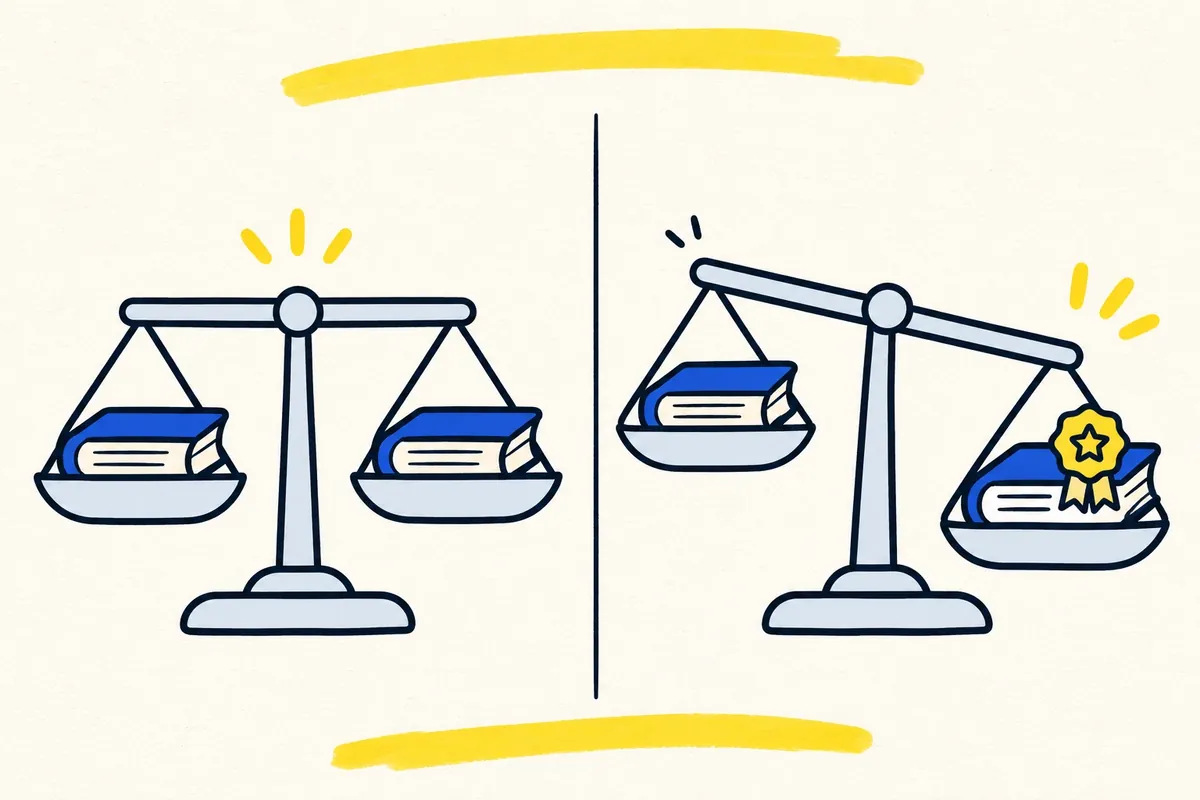
An unweighted GPA treats every class the same on a 4.0 scale. A weighted GPA gives extra points for harder classes like honors, AP and IB, so it can go above 4.0. That's really the whole difference. Now let's look at how it works.
What Is an Unweighted GPA
An unweighted GPA uses the standard 4.0 scale. An A is 4.0, a B is 3.0, a C is 2.0 and so on. It doesn't matter if the A came from AP Chemistry or a regular art class. Both count as 4.0. That means the highest unweighted GPA is 4.0.
What Is a Weighted GPA
A weighted GPA rewards you for taking harder classes. Most schools do it like this:
- Regular classes stay on the 4.0 scale
- Honors classes add 0.5, so an A is 4.5
- AP and IB classes add 1.0, so an A is 5.0
Some schools use different numbers, and some don't weight at all. Your student handbook will tell you how your school does it.
Same Grades and Two GPAs
Here's one student's semester:
- AP Biology, A
- Honors English, B+
- Algebra II, A-
- US History, B
- Spanish, A
Unweighted points: 4.0 + 3.3 + 3.7 + 3.0 + 4.0 = 18.0. Divide by 5 and you get a 3.6 unweighted GPA.
Weighted points: 5.0 + 3.8 + 3.7 + 3.0 + 4.0 = 19.5. Divide by 5 and you get a 3.9 weighted GPA.
Same grades, two different numbers. You can try this yourself with the high school GPA calculator, which shows both.
Do Colleges Look at Weighted or Unweighted GPA
Honestly, both, and often neither exactly as your school reports it. Every high school weights classes a little differently, so many colleges recalculate your GPA using their own rules. Some strip out the weighting and some only count core classes like English, math, science, social studies and languages.
What colleges care about most is the full picture: your grades and how challenging your classes were. They see your transcript, not just one number.
Which GPA Should I Put on Applications
Report your GPA the way your school reports it on your transcript. If the application asks for both, give both. Don't try to recalculate it yourself unless the application tells you to.
Is Cumulative GPA Weighted or Unweighted
It can be either. Cumulative just means it includes all your semesters. In high school, your cumulative GPA might be weighted or unweighted depending on your school. In college, GPAs are almost always unweighted.
Should I Take Harder Classes Just for the Weighted GPA
Take harder classes because you can handle them and they fit your goals. A weighted GPA boost is nice, but a string of Cs in AP classes won't help you. A good balance is challenging yourself in subjects you're strong in.
Final Thoughts
Your unweighted GPA shows your grades. Your weighted GPA shows your grades plus how hard your classes were. Colleges look at both, along with your transcript. Know both numbers, and focus on doing well in challenging classes.
How Different Schools Weight Classes
Not every school does it the same way. Here are a few setups you might see:
- Honors plus 0.5 and AP or IB plus 1.0. This is the most common.
- Every advanced class plus 1.0, with no difference between honors and AP.
- Plus 0.5 for all advanced classes.
- No weighting at all, so only an unweighted GPA is reported.
Some schools also cap the bonus, so a D or F in an AP class gets no extra points. If your weighted GPA doesn't match what you calculated, the school's rules are usually the reason.
How Colleges Recalculate GPA
Many colleges build their own version of your GPA so they can compare students fairly. A common approach looks like this:
- Keep only core academic classes like English, math, science, social studies and world languages.
- Remove the school's weighting.
- Add their own small bonus for honors, AP or IB classes, or none at all.
- Look at grades from 9th to 11th grade, and sometimes the first half of 12th.
The University of California system, for example, is well known for using its own GPA calculation. So don't stress about which number looks better. Focus on strong grades in good classes.
Weighted GPA and Class Rank
Schools that rank students often use weighted GPA for it. That way, students who take harder classes aren't punished for it. If class rank matters at your school, ask your counselor how it's calculated.
Pros and Cons of Each
Unweighted GPA
- Simple and easy to compare.
- Doesn't show how hard your classes were.
Weighted GPA
- Rewards students who take challenging classes.
- Harder to compare across schools because the rules differ.
Check Both in One Place
The high school GPA calculator shows your weighted and unweighted GPA side by side. Add your classes once and you'll have both numbers ready for applications.
Frequently Asked Questions
What is the difference between weighted and unweighted GPA
Unweighted GPA uses a 4.0 scale for every class. Weighted GPA adds extra points for honors, AP and IB classes.
What is a weighted GPA
It's a GPA that gives bonus points for harder classes, so it can go above 4.0.
What is an unweighted GPA
It's your GPA on the standard 4.0 scale, without any bonus points.
Do colleges look at weighted or unweighted GPA
Both. Many colleges recalculate your GPA using their own rules and look closely at your transcript.
What is the highest weighted GPA
At many schools it's 5.0, but some schools use different scales.
Is a 4.0 weighted GPA good
It depends on your classes. A 4.0 weighted could include some Bs in AP classes, which is still strong.
How many points do AP classes add
Usually 1.0 point. Honors classes usually add 0.5.
Is cumulative GPA weighted or unweighted
It can be either in high school. In college it's almost always unweighted.
Which GPA do I put on my college application
Use the GPA shown on your transcript. If the application asks for both, report both.
Can a weighted GPA be lower than unweighted
No. Weighting only adds points, so a weighted GPA is always the same or higher.
Is it better to get an A in a regular class or a B in an AP class
On a weighted scale, they both count as 4.0. Colleges often value the challenge of the AP class, as long as you can handle it.

The ScoreMyGrade team writes simple, student friendly guides and checks every calculator against worked examples and official sources.